
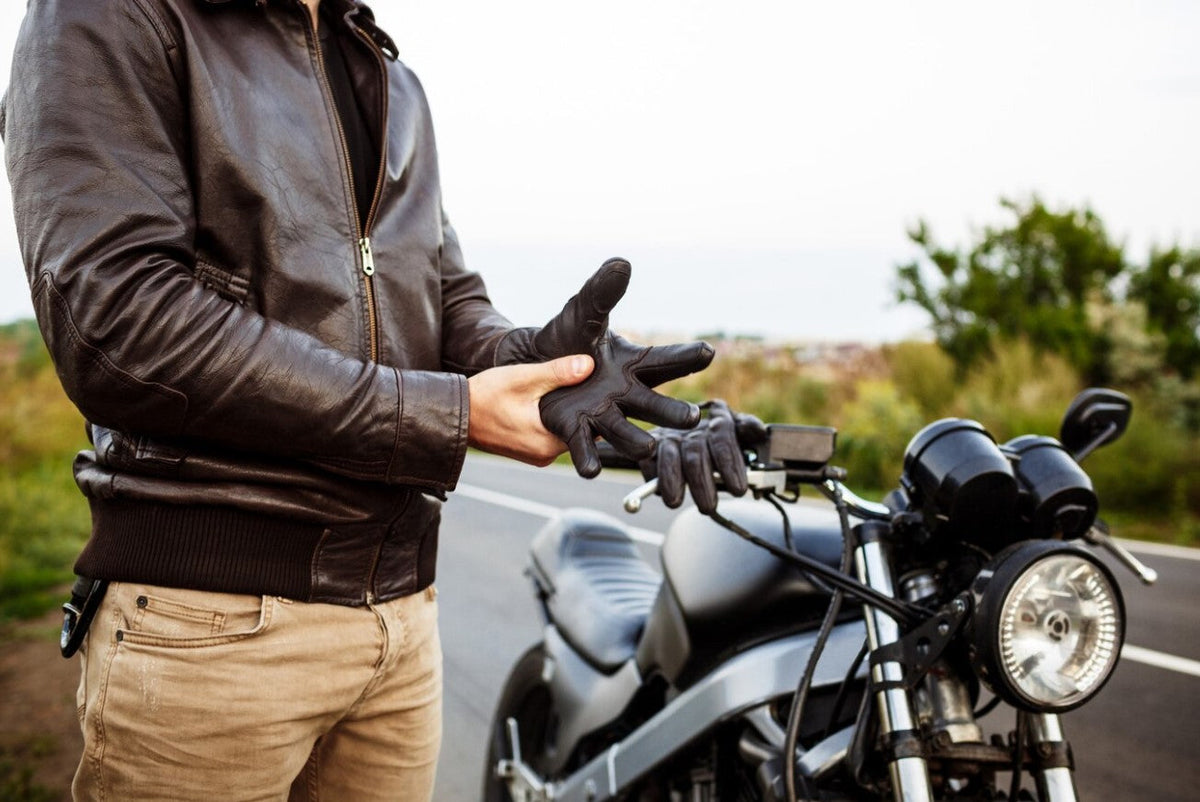
Leather Racing Jackets 2026: Styles & Performance; Materials Guide
|
KEY TAKEAWAYS: Leather racing jackets in 2026 combine CE-certified protection with fashion-forward design. Cowhide and kangaroo leather lead on performance; cafe racer and MotoGP styles dominate trends. Sustainable vegan leather is now a mainstream alternative. Proper fit and CE Level 2 armor are the two non-negotiable features for riders. |
A leather racing jacket is a high-performance outerwear garment originally designed for motorcyclists needing abrasion resistance and aerodynamic fit at speed. In 2026, it sits at the crossroads of road safety and street fashion , worn by competitive riders, urban commuters, and style-conscious consumers alike.
The global motorcycle apparel market is projected to reach USD 14.8 billion by 2027, growing at a 5.2% CAGR (Grand View Research, 2024). Leather jackets remain the single largest segment, driven by both performance demand and enduring fashion relevance.
Shop for Comfortable Men's Motorcycle Jackets
Whether you are shopping for your first racing jacket or upgrading to premium gear, this guide covers every decision point: style, material, fit, protection standards, and the latest 2026 trends.

Men wearing colorful leather MotoGP racing jacket with CE armor panels and perforated ventilation
From the Track to the Streets: A Brief History
Leather motorcycle jackets emerged in the early 1900s when horsehide and cowhide offered the only reliable abrasion protection for early racers.
By the 1950s, the style had crossed into popular culture , Marlon Brando in The Wild One (1953) and Steve McQueen's cafe racer aesthetic made the jacket a symbol of rebellion and freedom.
Today, over seven decades later, the silhouette remains largely intact while the engineering underneath has transformed completely.
In 2026, professional MotoGP riders use kangaroo leather suits rated to EN 13595 standards, while fashion-conscious buyers are turning to mushroom-leather and plant-based alternatives. The jacket has never been more versatile.
Popular Leather Racing Jacket Styles in 2026
|
Style |
Best Use |
Key Feature |
2026 Update |
|---|---|---|---|
|
Cafe Racer |
Street & casual |
Band collar, slim fit |
Oxblood & matte grey tones |
|
MotoGP-Inspired |
Track & sportswear |
CE armor, perforated panels |
Pre-curved ergonomic sleeves |
|
Retro Racer |
Heritage fashion |
Vintage patches, bold stripes |
Distressed patina effect |
|
Hybrid Fashion |
City & runway |
Suede panels, embroidery |
Sustainable bio-leather |
|
Oversized Biker |
Streetwear layering |
Relaxed boxy cut |
90s-inspired comeback |
1. The Classic Cafe Racer
The cafe racer jacket is the minimalist icon of the racing world.
Defined by its band collar, front zip closure, and snug ergonomic cut, it was designed to reduce wind drag for riders racing between London cafes in the 1960s.

In 2026, the style is seeing a significant revival with updated finishes , matte grey, oxblood, and deep forest green are replacing traditional black as the dominant colorways.
Slim fits have evolved into slightly relaxed cuts that still maintain the streamlined look while improving all-day comfort.
-
Style tip: Pair with slim dark jeans, Chelsea boots, and a plain crew-neck tee.
-
2026 update: Look for versions with ribbed stretch panels under the arms for improved mobility.
2. MotoGP-Inspired Performance Jackets
MotoGP-style leather jackets are built around race-track functionality.
These feature CE-approved shoulder and elbow armor, perforated leather panels for ventilation, pre-curved sleeves shaped for the riding position, and bold color-blocking drawn directly from professional racing liveries.
Brands like Dainese, Alpinestars, and REV'IT have made these accessible at multiple price points in 2026, with entry-level options starting around USD 299.
-
Key feature: Look for CE Level 2 armor certification , not just Level 1.
-
2026 update: Brands are now integrating D3O ghost armor, invisible protection that remains soft until impact.
3. Retro Racing Jackets
The retro racer taps nostalgia while remaining wearable today. Bold racing stripes, vintage team patches, contrasting leather panels, and deliberately aged finishes define the style. In 2026, distressed patina effects , worn-in looks achieved without sacrificing leather integrity , are in high demand.

Designers including Prada and Ralph Lauren have incorporated retro racing elements into their Spring 2026 collections.
-
Style tip: Combine with vintage straight-leg denim and aviator sunglasses.
4. Hybrid Fashion Jackets
Fashion-forward brands have reimagined the racing silhouette for the runway and the city. Asymmetric zippers, suede contrast panels, embroidered detailing, and premium lining fabrics characterize this category.
In 2026, sustainable and bio-based leathers , including mushroom leather (Mylo), apple-peel leather, and recycled polyurethane , have moved from niche to mainstream in this segment, with Stella McCartney and Gucci leading industry adoption.
5. Oversized Biker , 2026's Breakout Style
A new addition to the racing-adjacent category: the oversized biker jacket. Taking cues from 1990s streetwear, relaxed boxy silhouettes with exaggerated shoulders are dominating Fall 2026 collections at Balenciaga, Saint Laurent, and Peter Do.
While these do not offer track-level protection, they represent the current peak of leather jacket cultural cachet for non-riders.

| Man wearing black cafe racer leather jacket with band collar and silver zipper on urban street |
Leather Material Guide: Performance vs. Style
The leather used in a racing jacket determines its abrasion resistance, flexibility, weight, and longevity. No single material is best for every use case , match the leather to your primary purpose.
|
Leather Type |
Abrasion Rating |
Flexibility |
Best For |
|---|---|---|---|
|
Full-Grain Cowhide |
★★★★★ |
★★★☆☆ |
Track & commuting |
|
Kangaroo Leather |
★★★★★ |
★★★★☆ |
High-speed racing |
|
Goatskin |
★★★★☆ |
★★★★★ |
Street & touring |
|
Lambskin |
★★☆☆☆ |
★★★★★ |
Fashion / casual |
|
Vegan (PU/Bio) |
★★★☆☆ |
★★★★☆ |
Eco-conscious wear |
Cowhide: The Industry Standard
Full-grain cowhide is the benchmark against which all other racing jacket leathers are measured. It is typically 1.0–1.4mm thick, scores highly on CE abrasion tests, and develops a natural patina over years of wear.
Get your hands on Matte black biker jacket
Most mid-range to premium motorcycle jackets (USD 200–600) use cowhide as the primary material.
Kangaroo Leather: The Performance Pinnacle
Kangaroo leather delivers the highest tensile strength per gram of any natural leather , it is up to 10 times stronger than cowhide at equivalent weight (according to the University of Queensland materials research).
This makes it the preferred choice for professional racing suits. MotoGP world champion leather suits are almost universally kangaroo hide. The trade-off is cost: kangaroo leather jackets typically start at USD 800 and rise significantly from there.
Goatskin: Best All-Rounder for Street Riders
Goatskin offers an excellent balance of abrasion protection, flexibility, and comfort. Softer and more supple than cowhide from day one, goatskin jackets require less break-in time. This makes them popular with touring riders and urban commuters who wear their jacket daily.
Sustainable & Vegan Alternatives in 2026
The sustainability shift is real and measurable. In 2026, vegan leather now accounts for an estimated 15–18% of motorcycle jacket sales in the USA (Euromonitor International, 2026 projection).
High-quality polyurethane (PU) and plant-based alternatives like Pinatex (pineapple fiber) and Mylo (mushroom mycelium) are being used by brands targeting eco-conscious consumers. Performance credentials are improving rapidly , several CE-tested PU jackets now meet Level 1 abrasion standards.
-
Best vegan option for performance: High-denier TPU-backed PU leather rated to EN 17092.
-
Best bio-leather for fashion: Mylo by Bolt Threads , used by Stella McCartney.

|
Close-up comparison of cowhide leather and kangaroo leather texture showing grain difference for motorcycle jacket materials |
Must-Have Performance Features: What to Look For
The best leather racing jackets in 2026 are engineered systems, not just garments. Here is what separates real performance gear from fashion-only pieces:
CE Armor Standards: Level 1 vs. Level 2
CE certification for motorcycle protective clothing is governed by EN 17092 (replacing the older EN 13595). Armor inserts at the shoulders, elbows, and back are rated Level 1 (standard protection) or Level 2 (enhanced protection).
Level 2 certification requires the armor to absorb twice the impact energy of Level 1. For riders, Level 2 back protection is strongly recommended , but note that many jackets ship with Level 1 and offer Level 2 as an upgrade.
|
PRO TIP: Look for CE Level 2 elbow and shoulder armor as standard, then upgrade the back protector to Level 2 separately if needed. A Level 2 back insert typically costs USD 40–80. |
D3O Ghost Armor , 2026 Technology
D3O's Ghost armor represents a significant advancement in rider protection for 2026.
The material is soft and flexible at rest but stiffens on impact, distributing force across a wider area. It is thin enough to remain invisible under the jacket's outer leather , no visible bulk. Alpinestars, Dainese, and Knox now include D3O as standard in their premium lines.
Perforation & Ventilation Systems
Perforated leather panels , typically positioned at the chest, back, and under-sleeves , allow airflow during warm-weather riding.
In 2026, some brands have moved to micro-perforation patterns that maintain leather integrity while maximizing airflow by up to 40% compared to unperforated panels. Look for jackets with optional zip-out thermal liners that transform a summer riding jacket into a year-round garment.
Ergonomic Pre-Curved Construction
Professional racing jackets are cut in the riding position, not the standing position. Pre-curved sleeves, forward-set shoulders, and a dropped rear hem (longer at the back to prevent ride-up) are hallmarks of serious motorcycle gear.
Shop for trendy Racer Jackets , all under one roof
If a jacket bunches up when you sit on a bike, it was not designed for riding , regardless of what the label says.
Key Features Checklist
-
CE Level 2 armor at shoulders, elbows, and back
-
Perforated panels for ventilation
-
Pre-curved ergonomic cut (for riders)
-
YKK or equivalent heavy-duty zippers
-
Removable thermal liner
-
Reflective piping or detailing for night visibility
-
Waist adjusters and cuff buckles for personalized fit
-
Connecting zip to attach to matching riding trousers
Getting the Perfect Fit: The Most Important Decision
Fit determines both safety and comfort in a leather racing jacket. An ill-fitting jacket shifts armor away from impact zones and restricts movement , both dangerous for riders and uncomfortable for everyone.
Fit Fundamentals
-
Shoulders: Seams must align exactly with the shoulder point , not drooping onto the upper arm.
-
Chest: Snug enough to zip without strain, with no more than a flat hand's width of room.
-
Sleeves: Long enough to cover the wrist when arms are extended in riding position.
-
Waist: Most racing jackets are cut short , they should sit at or just above the hip bone.
-
Armor alignment: With the jacket on, elbow armor should sit over your elbow, not above or below.
|
PRO TIP: Leather stretches 5–10% with wear. A snug fit on day one will often become your ideal fit after 4–6 weeks of regular use. Never size up expecting it to loosen into shape , it will only become sloppy. |
Caring for Your Leather Racing Jacket
A premium leather jacket represents a USD 300–1,500+ investment. Proper maintenance preserves both its protective performance and appearance.
-
Clean monthly with a damp microfiber cloth , never soak leather.
-
Condition every 3–4 months with a pH-neutral leather conditioner (Leather Honey or Chamberlain's are widely recommended).
-
Store on a wide, padded hanger in a cool, dry space away from direct sunlight.
-
Avoid prolonged heat exposure, never dry near radiators or in direct sun.
-
For riders: Inspect seams, zippers, and armor pockets seasonally. Replace damaged armor inserts immediately.
-
Water resistance: Apply a spray-on leather protector each season for light rain resistance.
Frequently Asked Questions
The following questions are commonly asked by buyers researching leather racing jackets in 2026:
Q: What is the best leather for a motorcycle racing jacket?
A: Kangaroo leather offers the highest strength-to-weight ratio and is preferred for professional racing. For everyday riders, full-grain cowhide provides excellent abrasion resistance at a more accessible price point. Goatskin is the best choice for those prioritizing comfort and flexibility.
Q: What is CE Level 2 armor and why does it matter?
A: CE Level 2 armor (certified under EN 17092) absorbs twice the impact energy compared to Level 1 and is the recommended standard for any rider. It is especially important for back protection, where a crash can cause spinal injury.
Q: Are leather racing jackets suitable for everyday street wear?
A: Yes. Cafe racer and hybrid fashion styles in particular are designed for off-bike wear. The key is choosing a cut that works both in riding position and standing , look for jackets that do not pull uncomfortably across the back when you walk.
Q: What are the best leather racing jacket brands in the USA in 2026?
A: For performance/safety: Dainese, Alpinestars, REV'IT, and Knox. For fashion-forward styles: AllSaints, Schott NYC, and Belstaff. For sustainable/vegan options: Arma Moto and Stewart & Strauss (vegan lines).
Q: How much should I spend on a leather racing jacket?
A: Entry-level riding jackets with basic CE armor start at USD 150–250. Mid-range performance jackets with Level 2 armor and premium leather run USD 400–700. Professional-grade and designer pieces range from USD 800 to USD 2,000+. For regular riders, the USD 400–700 range offers the best protection-to-value ratio.
Q: Is vegan leather good enough for motorcycle protection?
A: Some CE-certified vegan leather jackets now meet Level 1 abrasion standards and are appropriate for urban commuting. However, no vegan leather currently matches the abrasion resistance of full-grain cowhide or kangaroo leather at equivalent thickness for high-speed riding.
Q: What are the trending leather jacket styles for 2026?
A: In 2026, the leading trends are: cafe racer revivals in oxblood and matte grey, oversized biker jackets inspired by 1990s streetwear, distressed patina retro racers, and hybrid fashion jackets using sustainable bio-leathers. MotoGP-inspired styles with D3O ghost armor are also gaining mainstream traction.
Final Verdict: Choosing the Right Leather Racing Jacket
A leather racing jacket in 2026 can be many things: a CE-rated safety garment for track days, a daily commuting layer with real abrasion protection, or a fashion statement drawing on 70 years of motorcycling heritage. The right choice depends on your primary use case.
-
For track and serious riding: MotoGP-style jacket in kangaroo or cowhide with CE Level 2 armor throughout.
-
For daily commuting: Cafe racer or goatskin jacket with Level 1 minimum armor and a removable liner.
-
For fashion and street wear: Hybrid or retro racer style , prioritize fit, leather quality, and hardware finish over armor specs.
-
For eco-conscious buyers: Vegan PU jackets from certified brands meeting EN 17092 Level 1.
Whatever your budget or riding style, invest in a jacket that fits correctly, uses genuine leather or CE-tested alternatives, and comes from a brand with verifiable quality standards. A well-chosen leather racing jacket is not a seasonal purchase , it is gear that improves with every mile.



Leave a comment
This site is protected by hCaptcha and the hCaptcha Privacy Policy and Terms of Service apply.