
By Cuir Jackets Editorial · Published June 18, 2026 · 9 min read
The MA-1 is a military flight jacket developed for the US Air Force in the early 1950s to replace the heavier leather B-15 jacket worn by pilots in older propeller aircraft.
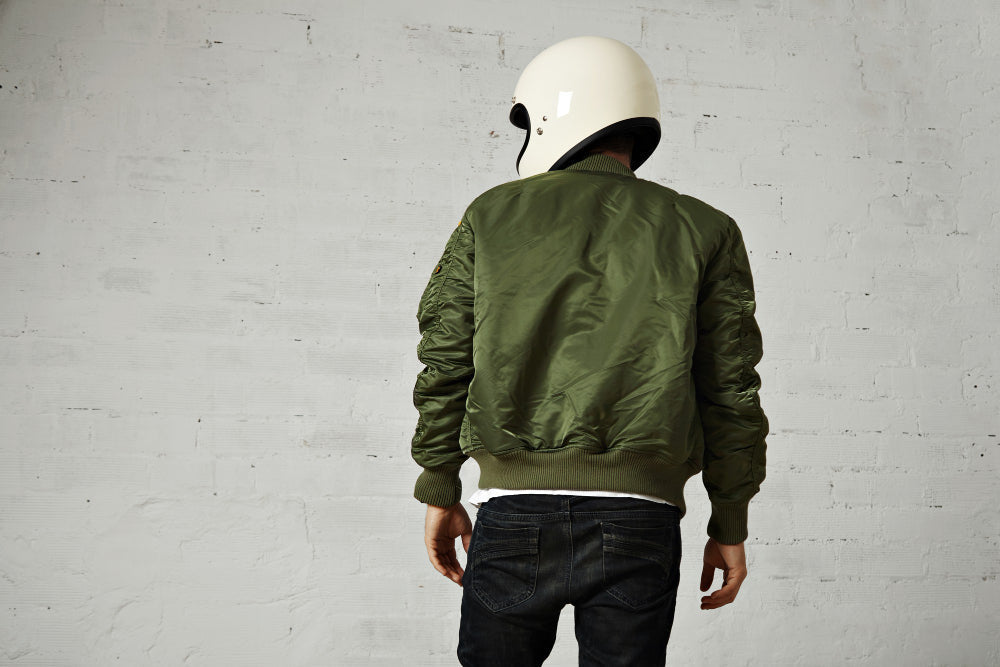
Built from lightweight nylon with a ribbed collar, cuffs, and a signature reversible orange lining for rescue visibility, the MA-1 became the template for what we now simply call the bomber jacket, one of the most copied silhouettes in modern menswear.
- The MA-1 was developed in the early 1950s to replace the leather B-15, designed for the cramped, fast cockpits of new jet aircraft.
- Its bright orange reversible lining let downed pilots flip the jacket inside out as a rescue signal.
- Alpha Industries won the US military manufacturing contract in 1963 and later launched civilian versions that became a global streetwear staple.
- The jacket was adopted by skinheads, mods, and punks in the UK from the late 1970s onward, and later by high fashion designers including Raf Simons and Issey Miyake.
- A leather bomber jacket traces back to earlier WWII-era flight jackets like the A-2, and offers different qualities, heavier, more durable, develops patina, compared to the original nylon MA-1.
Where the MA-1 Came From: A Cockpit Problem, Not a Fashion Idea
The MA-1 wasn't designed by anyone thinking about street style. During the Second World War, leather flight jackets were the norm for American air crews.

Looking for an Aviator jacket - Shop Now
These jackets slowly gave way to cotton variants as jet aircraft came into being, replacing piston-driven planes and adding the promise of tremendous speed.
The cockpit would no longer be freezing and loud beyond comprehension, but it would still require a comfortable, warm flight garment, just one that didn't get in the way of the new, tighter cockpit layouts.
The MA-1 and its predecessor, the B-15 flight jacket, were originally developed because the characteristics of new jet aircraft created new requirements.
The MA-1 was designed by the United States Air Force to serve as an intermediate weight flight jacket for use all year, manufactured from high quality nylon fabrics and polyester interlinings.
A nylon shell and synthetic Holofill quilting were lightweight but comfortable in sub-zero temperatures.
The overall design was sleek and avoided snarling up important cockpit equipment like the oxygen mask and headset.
This is the detail most people miss: every feature of the MA-1 exists because of a specific functional problem.
The lightweight nylon design allowed the pilot to wear the jacket open and be comfortable in warm weather.
Upon entering the aircraft, the pilot could zip the jacket closed and be afforded ample protection against the cold conditions encountered in flight.
The Orange Lining: Function First, Fashion Later
The most visually distinctive feature of the original MA-1, the bright orange interior, wasn't decorative.
The iconic flame orange lining was designed so that downed aircrews could reverse their jackets to signal to rescue teams.
Official versions with a safety orange interior were reversible: interior pockets had snaps and could function when flipped to the outside, and the front zipper had a large fob allowing zipping from either side.
Downed or lost airmen hoping for rescue could reverse the jacket and reveal the bright orange as a locating-aid for their searchers.
It's a small detail with a serious purpose, and it's part of why the jacket has retained such a strong identity even decades after most wearers have never set foot near a cockpit.
From Military Contract to Civilian Streetwear
In 1963, Alpha Industries won the contract to manufacture the MA-1. The company began producing a variation for civilian use in the early 1970s.

Get your hands on modern Shearling Bomber Black Leather Jacket
Although military issue MA-1s had been showing up on the streets of Europe, Japan, and the US throughout the 1950s and 60s, it was the easy availability of this civilian version that really launched the popularity of the style.
What happened next is the part most "bomber jacket" content skips entirely, and it's the part that actually explains why the jacket still matters today.
Skinheads, Mods, and Punks
These jackets became popular in the late 1970s with punks, mods, and skinheads. The Mods, a subculture birthed in London during the late '50s, had established military wear as part of its uniform.
As time went on, the working-class faction of the group became known as skinheads, known for listening to ska and reggae, incorporating elements of Jamaican Rudeboy dress, and by the end of the 1970s, cementing a uniform of Dr. Martens, skinny jeans, and bomber jackets.
The colour of the jacket carried real meaning within these scenes. "Olive green tops the color charts, although black ones are most popular with white power skins," writes George Marshall in Spirit of '69:
A Skinhead Bible. This is also where the jacket picked up a complicated reputation, whether its power still remains after decades of appropriation by different subcultures, taking it from a jacket associated with thug imagery to a mainstream staple, is its own story.
Reclamation and High Fashion
The jacket didn't stay confined to any one group. It was only once London's LGBTQ+ community started adopting the bomber jacket, subverting the skinhead's hypermasculine associations by appropriating the clothes they wore, that it really started to be freed from some of that negative imagery.
By the late 1990s and early 2000s, the MA-1 had made it into the highest tiers of fashion. Designers including Raf Simons, Issey Miyake, and Helmut Lang used the MA-1 as the blueprint for outerwear.

Since hit grail status, Simons's camouflage design from the Fall/Winter 2001 "Riot, Riot, Riot" collection famously fetches around $50,000 on resale platforms.
Japan developed its own deep relationship with the silhouette too.
The region's post-war love of American fashion most famously included military wear and bomber jackets, styled together with more formal, preppy pieces as part of '60s youth counterculture.
Japanese heritage labels like Buzz Rickson's and The Real McCoy's are now considered among the most historically accurate MA-1 reproductions available anywhere.
Get your hands on Red Varsity Leather Jacket Sleeves trending now!
MA-1 vs Leather Bomber Jacket - Two Different Family Trees
It's worth being precise here, because "bomber jacket" gets used as an umbrella term for two genuinely different garments with different origins.
The MA-1 is a nylon jacket, developed in the 1950s specifically because leather had become impractical for jet-age cockpits. During WWII, leather flight jackets were the norm, these slowly gave way to cotton and then nylon variants as jet aircraft replaced piston-driven planes.
So in a strict sense, the MA-1 exists because leather was being phased out of military aviation use, not because it was the preferred material.
A leather bomber jacket, by contrast, traces back further, to the earlier WWII-era A-2 and similar designs that the MA-1 itself replaced. Heavy shearling bomber jackets developed during the 1940s represent that older lineage.
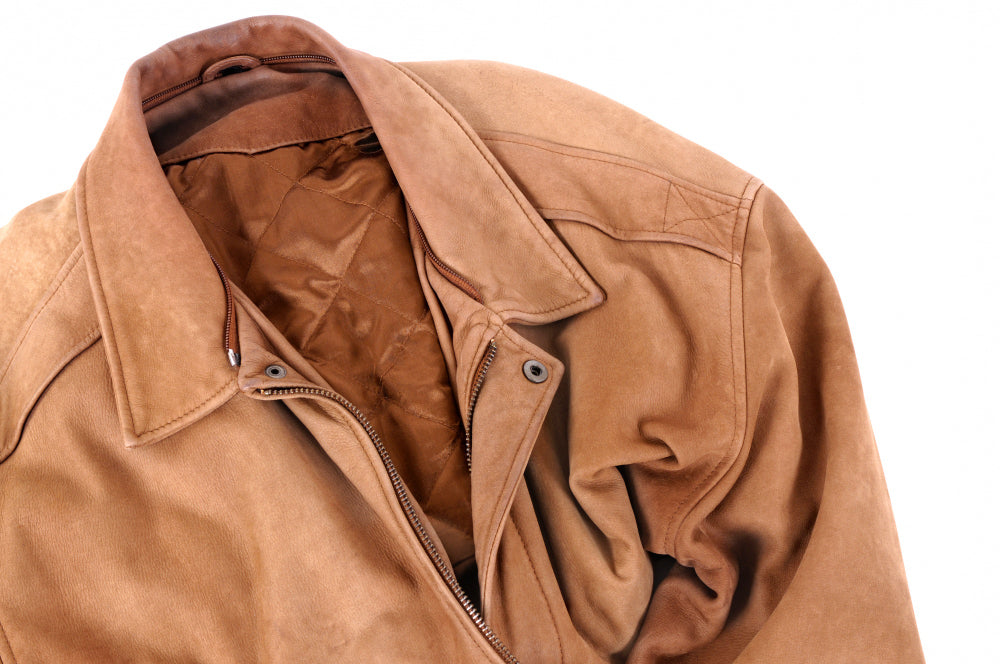
Today's leather bomber jackets borrow the bomber silhouette, ribbed cuffs, collar, front zip, structured body, but execute it in genuine cowhide or lambskin rather than nylon.
The practical differences matter if you're deciding between the two. Nylon MA-1 jackets are lighter, more water-resistant out of the box, and historically more affordable.
Leather bombers are heavier, develop a patina and improve with age the way nylon simply doesn't, and tend to last considerably longer with proper care.
If you want the bomber silhouette as a long-term wardrobe piece rather than a lightweight layering jacket, leather is the more durable investment.
The Cuir leather bomber jacket collection is built from 100% genuine cowhide and lambskin in that exact spirit, the bomber shape, real hide construction.
How to Style an MA-1 or Bomber Jacket Today
The bomber's enduring appeal comes from how little effort it takes to wear well. The silhouette already does the work, the trick is not competing with it.

Casual, Everyday
Slim or straight jeans, a plain t-shirt or henley, and clean trainers or boots. This is the original streetwear formula and it still works because the ribbed trims and structured shoulders of the bomber provide enough visual interest on their own.
Smart-Casual
Layer the bomber over a button-down shirt with chinos or tailored trousers. A leather bomber in particular bridges casual and put-together better than the nylon original, since the material itself reads as more considered.
Oversized / Streetwear
An oversized bomber paired with wide-leg trousers or cargo pants leans into the silhouette's subcultural roots — this is closer to how the jacket was originally worn on the street in the late '70s and '80s, just scaled up for current proportions.
Colour Choices
Sage green and black remain the two most recognisable MA-1 colourways, each carrying slightly different connotations given the jacket's subcultural history.
For a leather bomber, black and brown are the most versatile, working across more contexts without the specific cultural signaling that colour carried within the original MA-1 scenes.
Frequently Asked Questions About the MA-1 Bomber Jacket
What is an MA-1 flight bomber jacket?
The MA-1 is a military flight jacket developed for the US Air Force in the early 1950s, designed to replace the heavier leather B-15 jacket for pilots flying new jet aircraft.
It's made from lightweight nylon with polyester insulation, features a ribbed knit collar and cuffs, and a bright orange reversible lining originally meant to help downed pilots signal rescue crews.
It became the basis for what is now commonly called the bomber jacket.
Why does the MA-1 jacket have an orange lining?
The bright orange interior lining was a safety feature.
If a pilot was shot down or had to bail out, they could turn the jacket inside out to reveal the high-visibility orange exterior, making it easier for search and rescue teams to spot them.
Many original and reproduction MA-1 jackets are still made reversible for this reason, even though the feature is rarely used functionally today.
When was the MA-1 jacket first introduced?
The MA-1 was introduced in the early 1950s as a replacement for the B-15 flight jacket, developed in response to new jet aircraft technology that required pilots to operate in more cramped, faster cockpits.
Alpha Industries won the US military manufacturing contract for the MA-1 in 1963 and began producing civilian versions shortly after, which is largely how the jacket entered mainstream fashion.
Why did skinheads and punks wear MA-1 jackets?
The MA-1 became popular with skinhead, punk, and mod subcultures in the UK starting in the late 1970s because it was affordable, durable, and available through military surplus stores.
Its utilitarian, no-frills design fit the working-class aesthetic of these movements. Over time it became one of the most recognisable pieces of subcultural uniform in British youth culture, later being reclaimed by other groups including parts of the LGBTQ+ community.
What is the difference between an MA-1 bomber jacket and a leather bomber jacket?
The original MA-1 is made from nylon with polyester insulation, designed to be lightweight for pilots in the 1950s.
A leather bomber jacket uses the same general bomber silhouette, ribbed cuffs, collar, and waistband, front zip, but in genuine leather like cowhide or lambskin, which traces back to earlier WWII-era flight jackets like the A-2.
Leather bombers are heavier, more durable long-term, and develop a patina with age, while MA-1 nylon jackets are lighter and more weather-resistant out of the box.
How should you style an MA-1 or bomber jacket?
The bomber jacket works best kept simple, slim jeans or chinos, a plain t-shirt or henley, and minimal trainers or boots let the jacket's silhouette do the work.
Avoid pairing it with other heavily branded or busy pieces, since the bomber already has visual presence through its ribbed trims and structured shape.
For a smarter look, a bomber can be layered over a button-down shirt; for a streetwear look, pair an oversized fit with cargo pants or wide-leg trousers.
Is the MA-1 jacket still used by the military today?
No, the US military no longer issues the MA-1 to active flight crews, it was phased out in favor of fire-resistant alternatives starting in the late 1980s.
However, several allied militaries, including those of Japan, South Korea, and Israel, have continued to use versions of it.
Today it exists almost entirely as a civilian fashion item, produced by brands like Alpha Industries, Rothco, and various Japanese heritage labels.
The Bottom Line
The MA-1's staying power isn't really about nylon or orange linings, it's that almost every group that has worn it has put its own meaning onto a genuinely simple, well-built jacket.
From Cold War pilots to skinheads to Raf Simons' runway, the silhouette has barely changed in 70 years because the original design already solved the problem it needed to solve.
If you want that same bomber silhouette in a material built to last even longer and age even better, the Cuir leather bomber jacket collection takes the shape that started in a cockpit and builds it in genuine cowhide and lambskin instead.




Leave a comment
This site is protected by hCaptcha and the hCaptcha Privacy Policy and Terms of Service apply.