
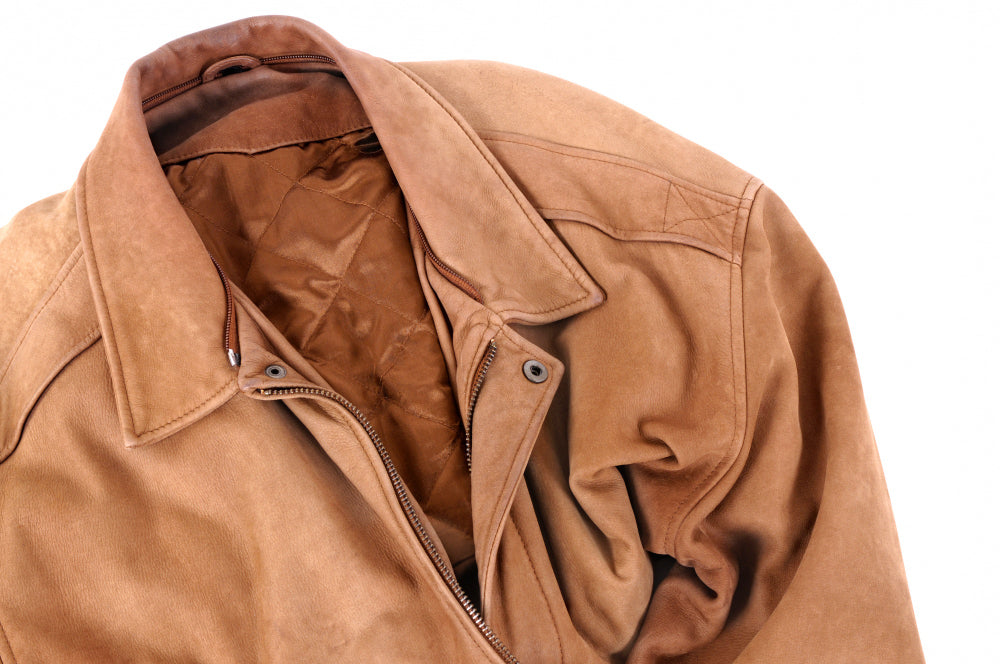
To clean a leather jacket or coat: wipe away surface dust with a dry microfiber cloth, dampen a soft cloth with a mild soap-and-water solution, wipe gently in small circles, remove soap residue with a clean damp cloth, then air dry away from heat.
Once fully dry, apply leather conditioner to replace the oils lost during cleaning. Never machine wash or dry clean leather using standard methods.
- Never machine wash or dry clean a leather jacket using standard methods — both strip natural oils and can cause permanent cracking.
- Less is more. Use minimal water, mild soap, and gentle circular motion — leather is porous and absorbs liquid quickly.
- Always spot test any cleaner on a hidden area first and wait 5–10 minutes before treating the full jacket.
- Air dry only. Heat from a hairdryer, radiator, or direct sun causes stiffness and cracking, patience is part of the process.
- Condition after every clean. Cleaning removes oils; conditioning puts them back. Skipping this step is the most common cause of dry, brittle leather.
- A well-cared-for leather jacket can last 25+ years and develop a richer patina over time, neglect leads to stress cracks within 3–5 years.
Why Leather Jackets Need Different Care Than Other Clothing
Leather is a natural, porous material, every wear, it absorbs body oils, sweat, dust, and pollution from the environment.
Over time, that buildup doesn't just make the jacket look dull, it actively degrades the leather fibers from the inside, leading to cracking, stiffness, and premature aging.
The good news is that the fix is simple and doesn't require professional equipment.
A leather jacket that is never cleaned or conditioned will begin showing stress cracks within 3–5 years.
One that receives regular care can last 25+ years and actually improve in appearance over that time, developing a rich, personal patina that a new jacket simply doesn't have.
What You'll Need
- A soft, dry microfiber cloth
- A second soft cloth for the soap solution
- Mild soap - dish soap, castile soap, or baby shampoo all work
- Distilled or lukewarm water
- A pH-balanced leather conditioner
- (Optional) a dedicated leather cleaner for tougher dirt
You don't need expensive products to clean a leather jacket at home. Most of what you need is probably already in your house.
Step-by-Step: How to Clean a Leather Jacket or Coat

Step 1: Wipe Away Surface Dust
Start with a dry microfiber cloth and wipe the entire jacket in gentle circular motions to remove loose dust, dirt, and debris. Using a soft cloth or brush, wipe away any dust or oil buildup.
Always use a circular motion to help prevent any form of damage to the leather. This step alone handles most everyday dirt without needing any liquid at all.
Step 2: Spot Test First
Before applying anything wet, test your cleaning solution on a small hidden area - inside a cuff, under the collar, or an inner seam — and wait 5–10 minutes to check for any discoloration or reaction. This single step prevents the vast majority of leather cleaning mistakes.
Step 3: Mix a Mild Cleaning Solution
Mix a few drops of baby shampoo or castile soap with warm distilled water.
This keeps the leather's pH balanced. A few drops is genuinely all you need, leather cleaning is one area where more product does not mean better results.
Step 4: Wipe Gently, Section by Section
Dampen a cloth in the mixture, do not soak it, and wipe the jacket gently in circular motions.
Work in small sections rather than trying to cover the whole jacket at once, this gives you more control and reduces the risk of over-wetting any one area.
Step 5: Remove Soap Residue
Using a clean, soft cloth, wipe down the jacket with clean water this time to remove soap residue. Use the smallest amount of moisture needed, make sure the jacket has no standing water sitting on the surface, as too much water does more harm than good.
Step 6: Air Dry Away From Heat
Pat the leather with a dry, soft towel, then hang the jacket on a wide shoulder hanger somewhere cool and shaded until it's completely dry.
Do not use direct heat (like a hairdryer or direct sunlight) to try to speed up the drying time. This is the step most people get wrong when they're in a hurry, and it's the one most likely to cause lasting damage.
Step 7: Condition the Leather
Cleaning removes natural oils from leather, conditioning restores them.
Apply a small amount of quality leather conditioner to a clean cloth and work it into the jacket using circular motions, covering the entire surface including seams and creases.
Let it absorb for 15–20 minutes, then buff off any excess with a clean dry cloth. The leather should feel soft and supple, with a subtle natural sheen.
Cleaning the Inside of the Jacket

Get your hands on the unique Shearling Bomber Leather Jacket
The lining matters more than most people realise. It may not be on display, but cleaning the inside is as important as preserving the outside appearance of your jacket.
Not only can odors eventually build up, but sweat on the interior of the jacket can eventually break down the lining and, over time, affect the leather itself from the inside.
Use the same mild soap solution on a soft sponge or cloth, paying close attention to the cuffs, collar, and underarm areas where sweat and body oils concentrate most.
Hang the jacket inside-out to dry, in the same cool, shaded conditions as the exterior.
Cleaning a Leather Motorcycle Jacket, What's Different
Motorcycle jackets take more punishment than any other leather garment - road dust, sweat, rain, and the occasional bug all add up faster than everyday wear.
When cleaning a leather motorcycle jacket, take extra care with high-wear areas like elbows, collars, and cuffs.
- Wipe down the exterior with a damp cloth after every ride
- Deep clean monthly with a diluted soap solution
- Use a soft brush to remove bugs and dried dirt from seams and creases
- Condition regularly with a balm suited to thicker leather
- Apply a waterproofing spray after cleaning during riding season
If you're shopping for a new jacket built to handle this kind of wear, the Cuir motorcycle jacket collection uses 100% genuine cowhide and lambskin, both of which respond well to this cleaning method and develop a better patina the more they're worn and cared for.
What to Avoid When Cleaning Leather
Don't use ammonia- or bleach-based cleaners to clean leather.
They can damage the finish and cause the leather to get excessively dry or even crack. Don't use too much water, either, as it can stain leather.
A short list of what never belongs near a leather jacket:
- Washing machines, full stop. Washers apply water, tumbling motion, and soaps that remove natural oils, distort form, and cause cracking in the hide. Machine cleaning often destroys a leather piece entirely.
- Standard dry cleaning, the chemicals used are not formulated for leather and can damage the finish
- Ammonia, bleach, and alcohol-based products
- Heat of any kind for drying, hairdryers, radiators, direct sunlight
- Saturating the leather, always damp, never wet
Cleaning Suede or Faux Leather? Different Rules Apply
This guide is for smooth, finished leather. Suede and nubuck need a completely different approach: Suede demands a suede brush and eraser only; it cannot get wet. Moisture flattens the fuzzy surface and leads to lasting harm.

Get this Goat Suede Jacket on 70% off
For stubborn suede marks, visit a specialist cleaner experienced with suede and nubuck materials.
If you have a faux leather (PU) jacket, you have more flexibility — synthetic hide might handle stronger methods better — but always check the garment tag first, since formulations vary widely between brands.
How Often Should You Clean and Condition a Leather Jacket?
| Task | Frequency | Notes |
|---|---|---|
| Surface dust wipe | After every few wears | Dry cloth only, no liquid needed |
| Deep clean | Every 1–3 months | More often for motorcycle jackets |
| Conditioning | Every 3–6 months | More frequently in dry climates |
| Professional clean | As needed | For stubborn stains or valuable pieces |
Frequently Asked Questions About Cleaning Leather Jackets
Can you put a leather jacket in the washing machine?
No. Washing machines apply water, tumbling motion, and detergents that strip the natural oils from leather, distort its shape, and cause cracking.
Machine washing can destroy a leather jacket entirely. Always clean leather by hand using a soft cloth and a mild, diluted soap solution, or take it to a specialist if you're unsure.
What is the best way to clean a leather jacket at home?
Wipe away surface dust with a dry microfiber cloth, then clean with a barely-damp cloth dipped in a mild soap and distilled water solution.
Wipe in small circular motions, remove soap residue with a clean damp cloth, then air dry away from heat or sunlight. Once fully dry, apply a leather conditioner to restore the oils lost during cleaning.
Can I clean a leather jacket with household items?
Yes, for light cleaning. A few drops of mild dish soap or baby shampoo mixed with distilled water works for most surface dirt.
Avoid ammonia, bleach, alcohol, and vinegar-based cleaners on finished leather, as these can strip colour and dry out the hide.
For stubborn stains or valuable jackets, a dedicated leather cleaner or professional service is safer.
How often should you clean and condition a leather jacket?
Wipe down surface dust after every few wears. Deep clean every 1–3 months depending on use, and more often for motorcycle jackets exposed to sweat, dust, and rain.
Condition every 3–6 months, or more frequently in dry climates or with heavy daily wear. A jacket that is never cleaned or conditioned can develop stress cracks within 3–5 years; one cared for properly can last 25+ years.
Should leather jackets be dry cleaned?
No, standard dry cleaning is not recommended for leather jackets, the chemicals used in regular dry cleaning can damage the finish and dry out the hide.
If a jacket needs professional cleaning, look specifically for a leather specialist or leather and suede cleaning service, not a general dry cleaner.
Can suede jackets be cleaned the same way as smooth leather?
No. Suede should never be cleaned with water or liquid cleaners, moisture flattens the napped texture and can cause permanent watermarks.
Use a dedicated suede brush and suede eraser for surface marks, and a suede protector spray for ongoing protection.
Stubborn stains on suede should go to a specialist cleaner experienced with suede and nubuck.
What should I avoid when cleaning a leather jacket?
Avoid ammonia, bleach, and alcohol-based cleaners — they strip the leather's finish and dry it out.
Avoid soaking the leather or using excess water, which can cause staining and warping. Never use a hairdryer, radiator, or direct sunlight to dry leather quickly, as fast heat-drying causes stiffness and cracking. Always spot test any product on a hidden area first.
Why does leather need conditioning after cleaning?
Cleaning removes dirt but also strips some of the leather's natural oils. Conditioning replaces those oils, keeping the hide soft, flexible, and resistant to cracking.
Apply a small amount of pH-balanced leather conditioner with a soft cloth, let it absorb for 15–20 minutes, then buff off the excess.
Skipping this step is the most common reason leather jackets become dry and brittle over time.
The Bottom Line
Cleaning a leather jacket properly is simple once you know the steps, dry wipe, spot test, gentle soap solution, air dry, condition.
The mistakes that ruin leather almost always come from rushing the drying process with heat or skipping conditioning afterward. Build this into a routine every few months and a quality leather jacket will outlast almost anything else in your wardrobe.
If you're looking for a jacket built from genuine leather that rewards this kind of care, the Cuir motorcycle jacket collection and bomber jacket range are both made from 100% real cowhide and lambskin, leather that genuinely improves with the right maintenance rather than just surviving it.



Leave a comment
This site is protected by hCaptcha and the hCaptcha Privacy Policy and Terms of Service apply.